
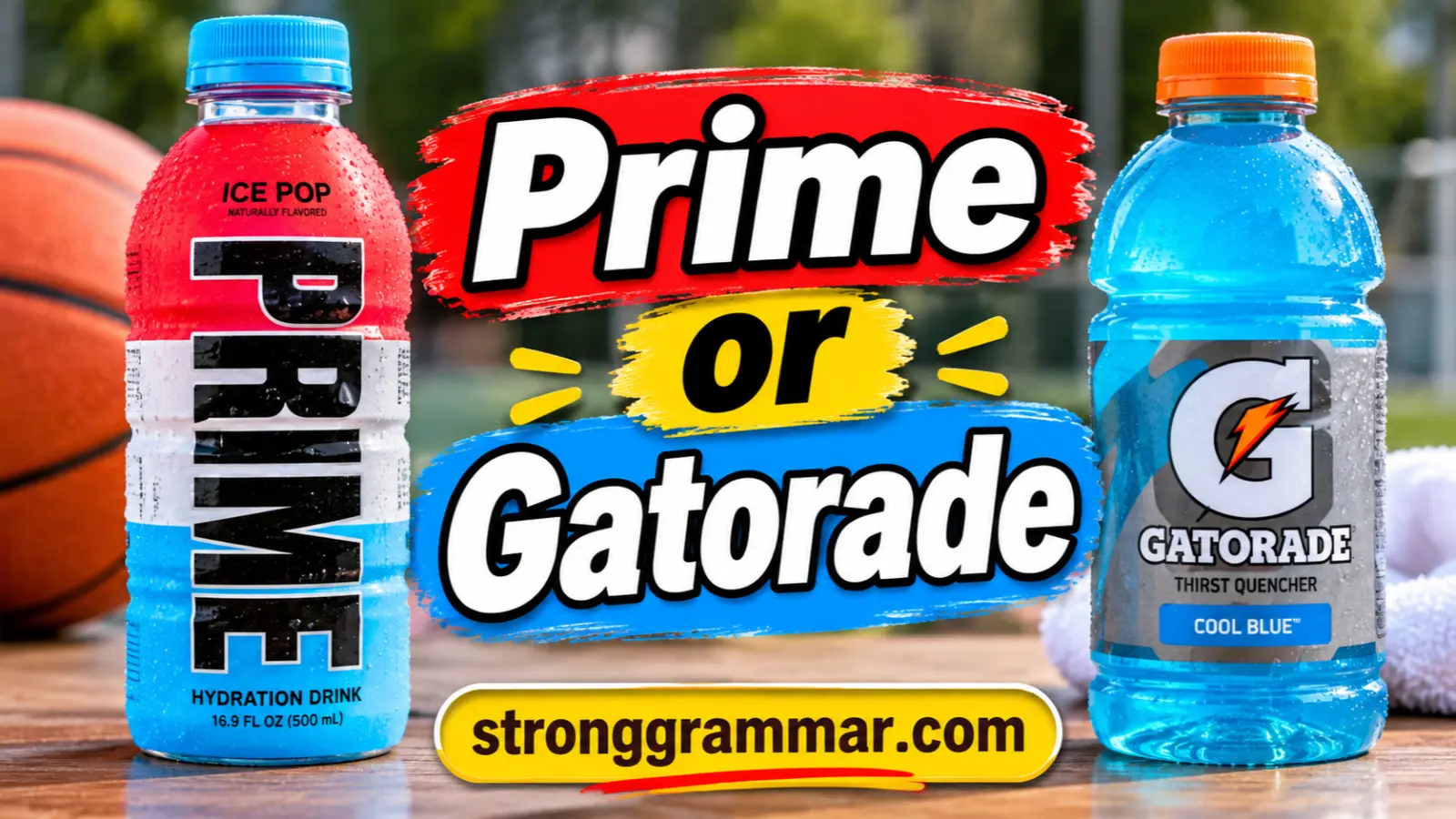
Choosing between PRIME and Gatorade can be confusing, especially when both drinks advertise hydration and electrolytes. However, they have different nutritional profiles, ingredients, and purposes. While PRIME Hydration offers fewer calories and less sugar, traditional Gatorade provides carbohydrates and more sodium, which can be useful during demanding physical activity.
So, is PRIME or Gatorade better? The answer depends on what you need. PRIME Hydration may suit someone looking for a low-calorie, caffeine-free flavored drink, while Gatorade Thirst Quencher may be more useful during prolonged exercise when replacing sodium and providing carbohydrates matters.
Let’s compare their ingredients, nutrition, hydration benefits, and differences to help you make an informed choice.
What Is PRIME?
PRIME Hydration is a beverage brand known for its colorful bottles, bold flavors, and electrolyte-focused drinks. It was created by PRIME, a company associated with social media personalities Logan Paul and KSI.
PRIME Hydration is designed as a caffeine-free beverage containing electrolytes and other added ingredients. Its formula includes coconut water, branched-chain amino acids (BCAAs), and vitamins.
One important detail is that PRIME Hydration and PRIME Energy are different products. PRIME Hydration does not contain caffeine, whereas PRIME Energy contains 200 mg of caffeine per 12-ounce can.
Some features of PRIME Hydration include:
- Low calories: Certain 16.9-ounce bottles contain approximately 25 calories.
- Electrolytes: Includes potassium, sodium, and other electrolytes.
- Caffeine-free: The standard Hydration drink does not contain caffeine.
- Added ingredients: Contains BCAAs, vitamins, and coconut water.
- Different flavors: Available in several fruit-inspired flavors.
PRIME Hydration may appeal to people who prefer a flavored drink without the sugar content of traditional sports drinks. However, its relatively high potassium and low sodium content are important considerations when choosing a drink for exercise.
What Is Gatorade?
Gatorade is a well-known sports drink brand developed in 1965 by researchers at the University of Florida. It was originally created to help athletes replace fluids and electrolytes lost through sweating while providing carbohydrates for energy.
Traditional Gatorade Thirst Quencher contains water, carbohydrates, sodium, and potassium. These ingredients make it different from many low-calorie electrolyte beverages.
Some important features of traditional Gatorade include:
- Electrolytes: Provides sodium and potassium to help replace minerals lost through sweat.
- Carbohydrates: Contains sugars that provide a source of energy during physical activity.
- Hydration support: Supplies fluids and electrolytes during demanding exercise.
- Different varieties: Includes regular, reduced-sugar, and zero-sugar options.
- Multiple flavors: Available in several familiar fruit flavors.
Gatorade is particularly relevant to people participating in prolonged physical activities, especially when they need both fluids and carbohydrates.
However, its traditional formula contains considerably more sugar and calories than PRIME Hydration.
PRIME or Gatorade Key Differences
Although both drinks contain electrolytes, they are not nutritionally identical.
Here is a general comparison of PRIME Hydration and traditional Gatorade Thirst Quencher.
| Feature | PRIME Hydration | Gatorade |
|---|---|---|
| Main purpose | Hydration beverage | Sports hydration and energy |
| Calories | About 25 | About 140 |
| Sugar | Low | Higher |
| Sodium | Relatively low | Higher |
| Potassium | Relatively high | Lower |
| Caffeine | None | None in traditional version |
| Carbohydrates | Low | Higher |
| Coconut water | Yes | Not a defining ingredient |
| Added BCAAs | Yes | Not a standard feature |
Approximate figures for a 16.9 oz PRIME Hydration bottle and a 20 oz regular Gatorade bottle. Formulas and flavors can vary.
1. Sugar Content
Sugar is one of the biggest differences between these beverages.
PRIME Hydration contains considerably less sugar than traditional Gatorade. Some PRIME Hydration varieties contain only around 1–2 grams of sugar per bottle, depending on the flavor and formulation.
Traditional Gatorade Thirst Quencher contains approximately 34–36 grams of sugar or carbohydrates in a 20-ounce bottle, depending on the product label.
If you want to reduce your added sugar intake, PRIME Hydration may be the more suitable option.
However, sugar is not automatically bad during exercise. Carbohydrates can provide useful fuel during prolonged or intense physical activity.
2. Electrolytes
Both beverages contain electrolytes, but their nutritional balance is different.
PRIME Hydration emphasizes potassium and includes other electrolytes, such as sodium and magnesium.
Traditional Gatorade provides sodium and potassium, with a considerably higher sodium content than standard PRIME Hydration.
This difference matters because sodium is one of the main electrolytes lost through sweat.
For people doing prolonged exercise in hot conditions, a drink containing carbohydrates and sufficient sodium may be more appropriate than choosing a beverage based only on its advertised total electrolyte content.
3. Calories
If calorie intake is important to you, PRIME Hydration has an advantage over traditional Gatorade.
A standard PRIME Hydration bottle contains approximately 25 calories, while a 20-ounce bottle of traditional Gatorade contains approximately 140 calories.
The difference mainly comes from their carbohydrate and sugar content.
However, calorie intake should be considered alongside your activity level and nutritional needs. Someone completing a long training session may benefit from the additional carbohydrates in a traditional sports drink.
4. Ingredients
PRIME Hydration and Gatorade use different ingredient combinations.
PRIME Hydration contains ingredients such as:
- Coconut water concentrate
- Electrolytes
- BCAAs
- Vitamins
- Sweeteners and flavorings
Traditional Gatorade Thirst Quencher generally contains:
- Water
- Sugar and dextrose
- Sodium
- Potassium
- Acidity regulators
- Flavorings
Neither ingredient list automatically makes one beverage healthier for everyone. Your choice should depend on the nutritional qualities you need.
Which Is Better for Hydration PRIME or Gatorade?
There is no universal winner because hydration needs depend on physical activity, sweating, temperature, and individual nutritional requirements.
PRIME Hydration provides a low-calorie alternative with potassium and other electrolytes. It may be suitable when you want a flavored drink without the carbohydrate content of traditional Gatorade.
Gatorade Thirst Quencher provides more sodium and carbohydrates. These can be useful during longer workouts, endurance activities, and situations involving substantial sweating.
For ordinary daily hydration and shorter exercise sessions, plain water is generally sufficient for most people. Sports drinks are more useful when physical activity, heat, or heavy sweating creates additional fluid and electrolyte requirements.
The most important point is that more electrolytes do not automatically mean better hydration. The type and amount of electrolytes matter.
PRIME vs Gatorade Which One Is Better for Different Needs?
The best choice becomes easier when you consider your reason for drinking it.
For Everyday Hydration
Neither beverage is necessary for most people’s everyday hydration needs.
Water is generally the simplest choice because it provides fluids without added sugar, sweeteners, or extra calories.
If you prefer flavored beverages, PRIME Hydration offers a lower-calorie alternative to regular Gatorade.
For Gym Workouts
For ordinary gym sessions lasting around an hour or less, water is usually enough.
If you exercise intensely for longer periods or sweat heavily, an appropriate sports drink may help replace fluids and electrolytes.
Gatorade’s carbohydrate content can also provide fuel during extended exercise.
For Long Sports Activities
Traditional Gatorade may be more useful during prolonged activities because it supplies both sodium and carbohydrates.
These nutrients can support fluid replacement and provide energy when exercise lasts a long time.
PRIME Hydration has a different nutritional balance, with relatively little sodium and carbohydrate.
For Lower Sugar Intake
PRIME Hydration generally contains less sugar than traditional Gatorade.
This makes it an option for people looking to reduce their intake of sugary beverages.
However, remember that Gatorade also offers zero-sugar varieties, so you do not have to choose between only regular Gatorade and PRIME.
For Caffeine-Free Hydration
Both PRIME Hydration and traditional Gatorade Thirst Quencher are caffeine-free.
However, always check the exact product name and label. PRIME Energy is a separate caffeinated product and should not be confused with PRIME Hydration.
Is PRIME Healthier Than Gatorade?
PRIME Hydration may be a better choice for someone who wants fewer calories and less sugar. Traditional Gatorade may be more useful for someone who needs carbohydrates and sodium during prolonged physical activity.
However, calling one drink universally healthier would be misleading.
Consider these factors:
- Sugar intake: PRIME Hydration generally contains less sugar than regular Gatorade.
- Sodium needs: Gatorade Thirst Quencher provides more sodium.
- Calorie intake: PRIME Hydration is considerably lower in calories.
- Exercise duration: Longer, more demanding exercise may require additional carbohydrates and electrolytes.
- Daily hydration: Water remains a suitable everyday option for most people.
It is also worth remembering that PRIME Hydration contains added sweeteners and is not the same as drinking plain water.
The healthier choice is the beverage that matches your actual needs rather than the one with the most attractive marketing claims.
Common Mistakes When Comparing PRIME and Gatorade
People sometimes misunderstand the differences between these drinks.
Here are a few common mistakes to avoid:
1. Assuming all PRIME drinks contain caffeine.
PRIME Hydration is caffeine-free. PRIME Energy contains caffeine, so always check the product category.
2. Assuming more electrolytes always mean better hydration.
Different electrolytes perform different functions. Sodium is particularly important when replacing substantial sweat losses.
3. Thinking low sugar automatically means better sports performance.
Carbohydrates can be useful fuel during prolonged exercise. A low-sugar beverage may not provide the energy needed for every sporting activity.
4. Treating sports drinks as everyday necessities.
Most people can meet their ordinary hydration needs through water and their regular diet.
5. Comparing different bottle sizes.
Nutrition figures can be misleading when serving sizes are different. Always compare the same volume or calculate the values per serving.
FAQs:
1. Is PRIME or Gatorade better?
Neither is universally better. PRIME Hydration contains fewer calories and less sugar, while traditional Gatorade provides more sodium and carbohydrates. Your activity level and nutritional needs should determine your choice.
2. Does PRIME have more electrolytes than Gatorade?
PRIME Hydration advertises a higher total electrolyte amount on certain bottles, but that does not necessarily make it better for every hydration situation. Its formula emphasizes potassium, while Gatorade Thirst Quencher provides considerably more sodium.
3. Is PRIME healthier than Gatorade?
PRIME Hydration has fewer calories and less sugar than regular Gatorade. However, Gatorade provides carbohydrates and more sodium, which can be useful during prolonged exercise. The healthier option depends on your needs.
4. Can you drink PRIME and Gatorade every day?
Both beverages can contribute to fluid intake, but most people do not need sports drinks every day. Water is generally a better everyday hydration choice. Consider the sugar, sweeteners, sodium, and other ingredients when deciding how frequently to consume them.
5. Does PRIME have caffeine?
PRIME Hydration does not contain caffeine. However, PRIME Energy is a separate product that contains 200 mg of caffeine per 12-ounce can.
6. Is Gatorade better than PRIME for athletes?
Traditional Gatorade may be more suitable for athletes participating in prolonged, intense activities because it provides sodium and carbohydrates. However, hydration requirements vary according to exercise intensity, duration, temperature, and individual sweat losses.
7. Which has less sugar, PRIME or Gatorade?
PRIME Hydration generally has significantly less sugar than traditional Gatorade Thirst Quencher. However, Gatorade also offers zero-sugar products, so check the specific variety before comparing.
8. Is PRIME the same as an energy drink?
No. PRIME Hydration is a caffeine-free hydration beverage, while PRIME Energy is a caffeinated energy drink. They have different ingredients and purposes.
Conclusion:
So, should you choose PRIME or Gatorade?
The answer depends on what you expect from your drink.
PRIME Hydration is a reasonable option if you prefer fewer calories, less sugar, and a flavored beverage containing electrolytes. Traditional Gatorade is more suitable for certain prolonged physical activities because it provides more sodium and carbohydrates.
Neither drink is automatically the best choice for everyone, and neither is essential for ordinary daily hydration.
The simplest takeaway: Choose PRIME Hydration if lower sugar and calories are your priorities. Consider traditional Gatorade when you need carbohydrates and sodium during demanding exercise. For everyday hydration, water is usually enough.